




























A saw is only as capable as the blade fitted to it. The correct blade cuts more easily, leaves a cleaner edge and places less unnecessary strain on the saw. The wrong blade can cause slow cutting, splintering, chipped coatings, heat marks and frustration — even when the saw itself is perfectly set up.
This guide explains how to choose a circular saw blade for a table saw, mitre saw, plunge saw or handheld circular saw. We will look at blade dimensions, tooth count, tooth shape, kerf and the material being cut, then bring everything together in a simple selection checklist.
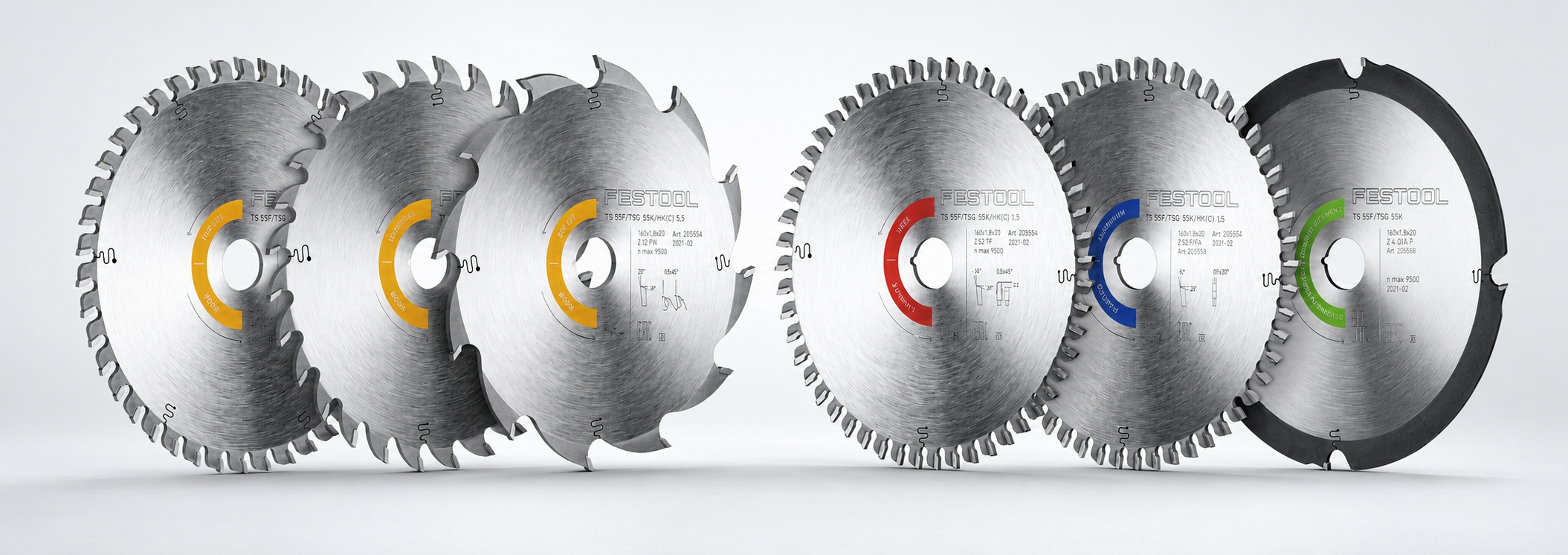
The quick answer: choose the blade by the job
| Cutting job | Best starting point | What to look for |
|---|---|---|
| Fast ripping in solid wood | Wood rip-cut blade | Fewer teeth, large gullets and an efficient tooth geometry for cutting with the grain |
| Everyday cutting in wood and wood-based panels | Wood universal or general-purpose blade | Medium tooth count and a balanced geometry for ripping and cross-cutting |
| Clean cross-cuts, veneered boards and fine joinery | Wood fine-cut blade | More teeth and a geometry designed to shear fibres cleanly |
| Melamine, laminate and HPL | Dedicated laminate/HPL blade | High tooth count with a durable tooth geometry suited to hard, brittle coatings |
| Aluminium profiles and suitable plastics | Dedicated aluminium/plastics blade | Fine, durable carbide teeth — commonly a trapezoidal/flat or other manufacturer-specified geometry |
| Steel tube, profiles or sheet | Dedicated steel-cutting or cermet blade | A blade and saw combination specifically approved for the grade, shape and thickness of steel |
| Construction timber that may contain nails | Construction or demolition-rated blade | Use only a blade explicitly marked as suitable for nail-embedded wood |
- Will the blade physically and safely fit your saw?
- Is it designed for the material you are cutting?
- Do you value cutting speed, edge quality or a balance of both?
1. Start with the saw — not the blade
Before comparing brands or tooth counts, read the saw’s rating plate and instruction manual. A blade must match the machine. Check the following specifications every time you buy a replacement or specialist blade.
Blade diameter
The blade diameter must be one approved for the saw. Common sizes include 160 mm, 165 mm, 184 mm, 190 mm, 210 mm, 216 mm, 225 mm, 254 mm, 260 mm, 305 mm and 355 mm, but the correct size is determined by the machine — not by the size you would like to fit.
Never fit a larger blade simply to gain cutting depth. It may interfere with the guard, riving knife, housing or other safety components. A smaller blade should only be used if the saw manufacturer expressly permits it.
Bore or arbor size
The bore is the centre hole that fits over the saw’s arbor. It must match accurately so the blade runs concentrically. Typical metric bore sizes include 16 mm, 20 mm and 30 mm.
Some blades include reducing rings or bushes. Use only rings approved for the blade and saw, and make sure they sit flat and securely. A reducing ring changes the bore fit; it does not make an otherwise incompatible blade suitable for the machine.
Kerf and blade-body thickness
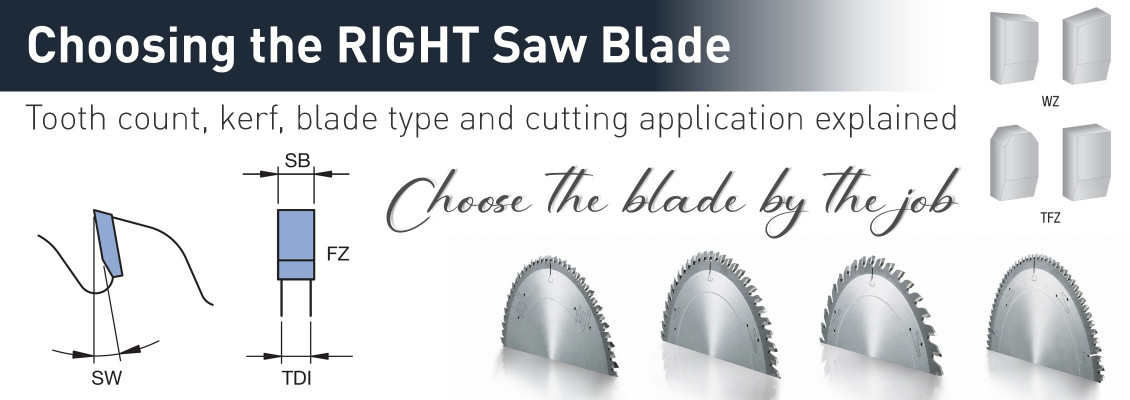
Kerf is the width of material removed by the teeth. A thin-kerf blade removes less material, requires less cutting force and can be useful on cordless or lower-powered saws. A full-kerf blade usually has a stiffer plate and may remain more stable in demanding work.
On a table saw, the blade must also be compatible with the riving knife. As a general relationship, the blade body must be thinner than the riving knife, while the kerf must be wider than the riving knife. Always use the dimensions and limits stated by the saw manufacturer. Do not fit a thin-kerf blade if the resulting cut is too narrow for the fitted riving knife.
Maximum speed
The maximum RPM printed on the blade must be equal to or greater than the saw’s no-load speed. Never use a blade above its rated speed.
Rotation direction
Match the rotation arrow on the blade to the arrow on the saw. Do not judge direction only by looking at the teeth, especially when fitting an unfamiliar blade or working with a saw whose blade mounts on the opposite side.
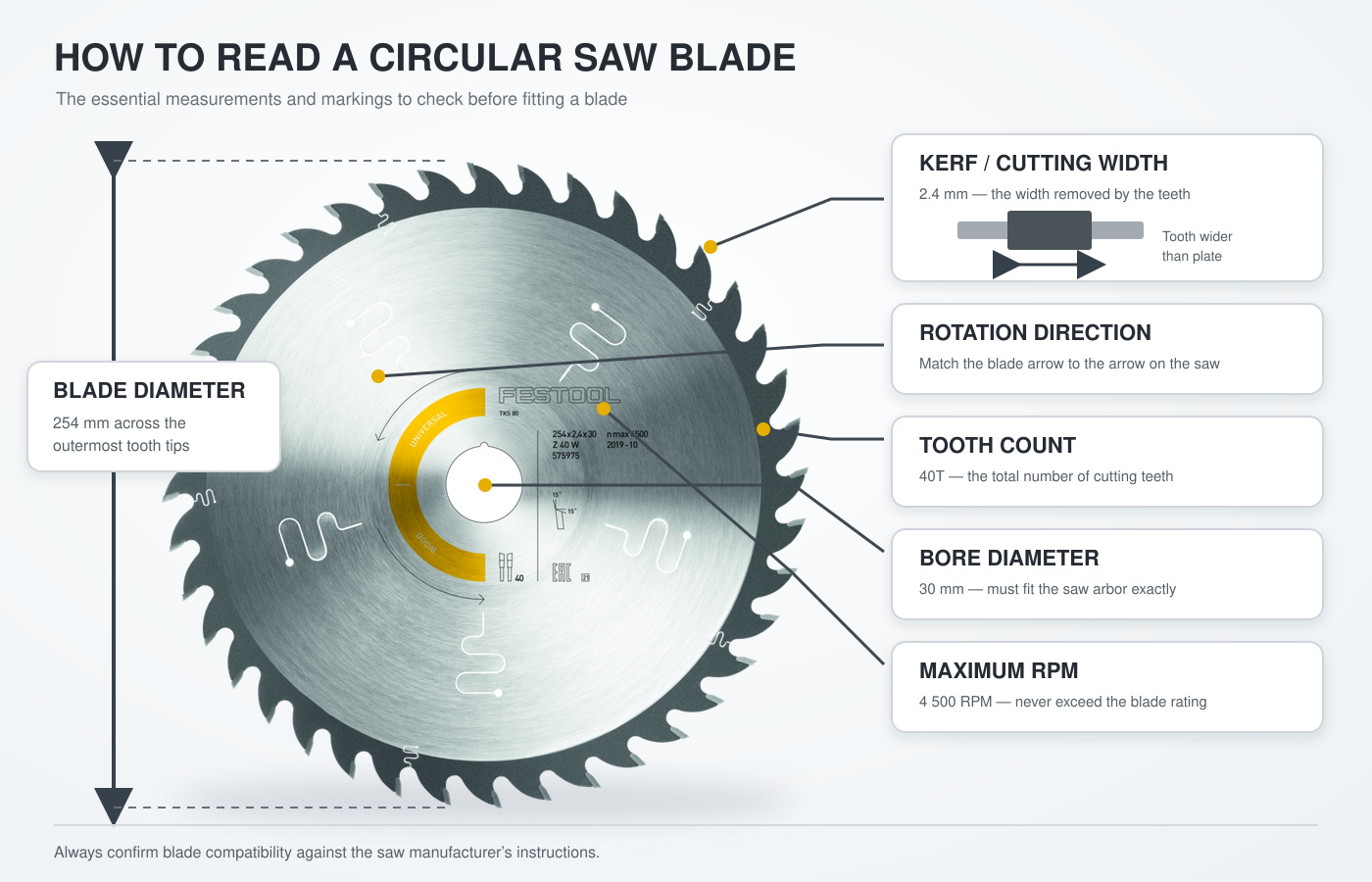
Two 216 mm blades may have different bores, kerfs, body thicknesses, tooth shapes, hook angles and speed ratings. One may be intended for wood, while the other is designed for aluminium or laminate.
2. Match the blade to the material
The material is the most important selection after basic machine compatibility. Similar-looking blades can behave very differently because their carbide grade, tooth geometry, plate design and coating were developed for different cutting tasks.
Wood rip-cut blades: fast cutting with the grain
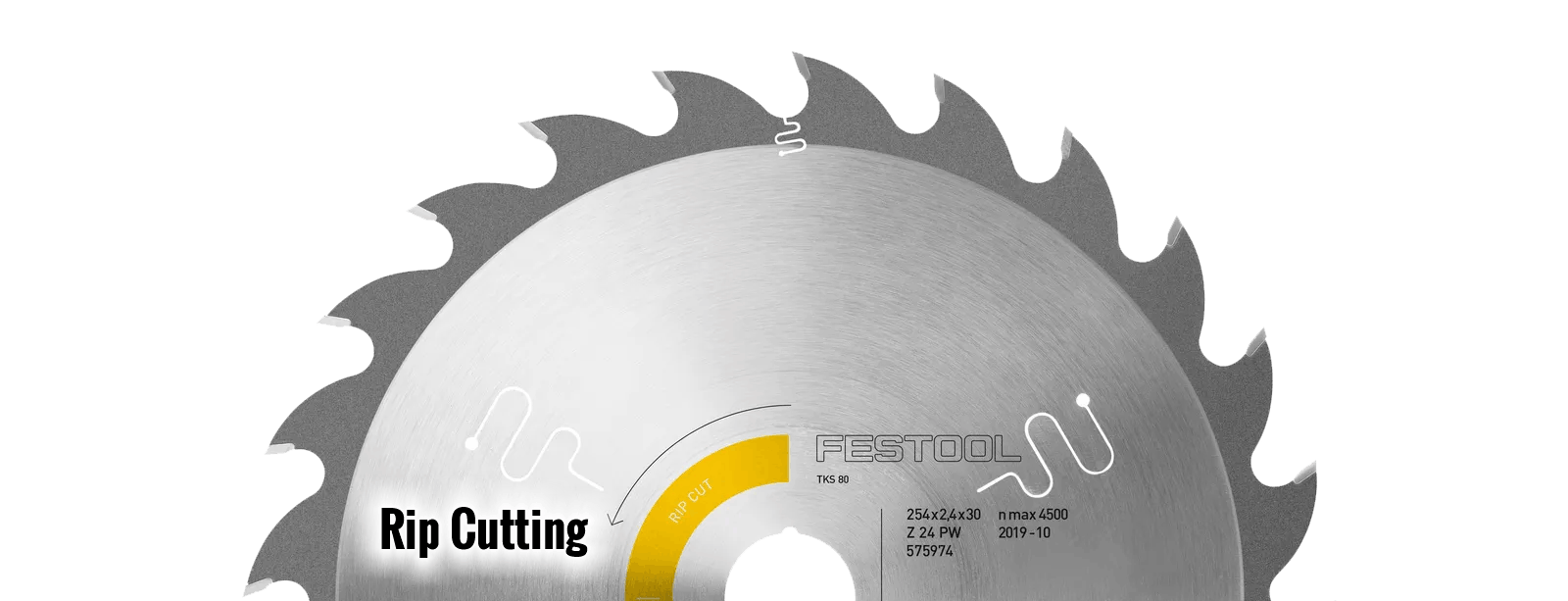
Ripping means cutting parallel to the grain of solid wood. The blade has to remove long chips, so a rip blade normally uses fewer teeth with larger spaces, called gullets, between them. This allows a faster feed rate and reduces the tendency for chips to pack around the teeth.
Choose a rip-cut blade when you are sizing solid boards lengthwise, especially when speed and low cutting effort are more important than a finish-ready edge. A dedicated rip blade may leave a coarser edge than a fine-cut blade, but it should cut more freely in the task for which it was designed.
Wood universal blades: the practical all-rounder
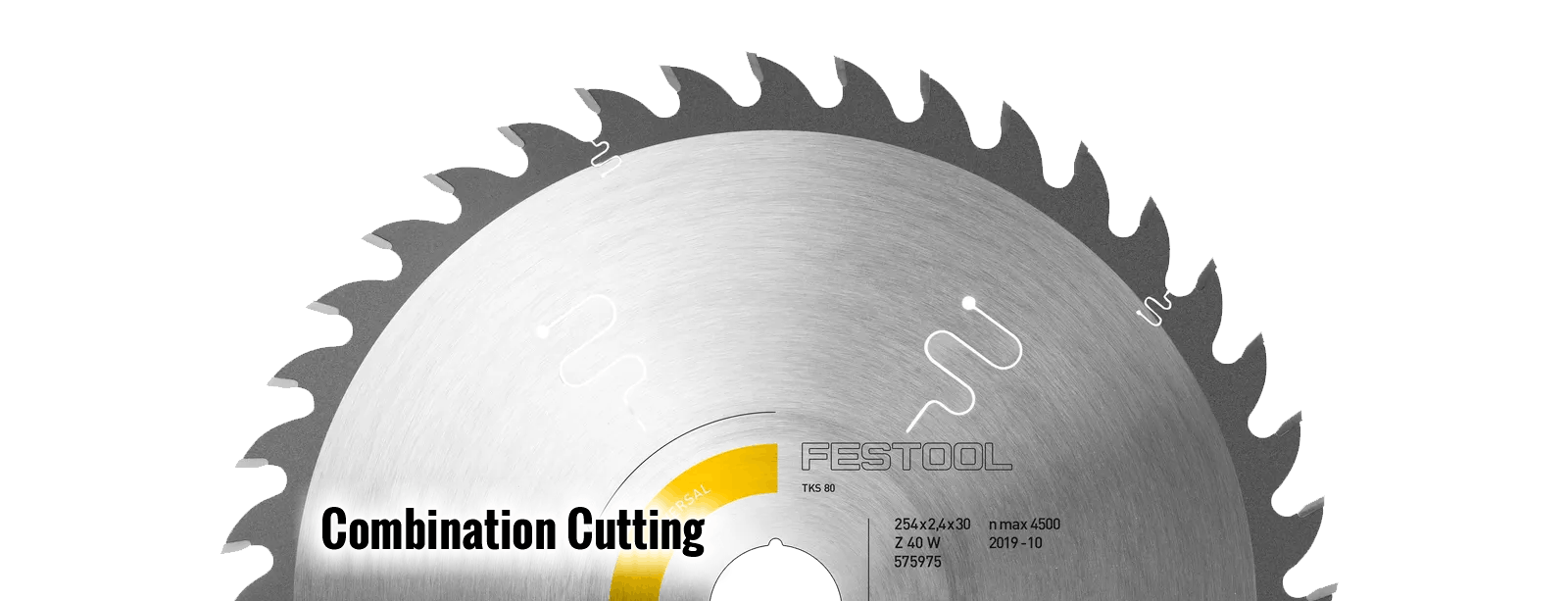
A universal or general-purpose blade is the sensible first blade for many users. Its medium tooth count and balanced tooth geometry allow it to handle both ripping and cross-cutting in solid wood, plywood, MDF and other wood-based panels, provided the blade manufacturer lists those materials.
It will not rip as quickly as a specialist rip blade or leave the same refined cross-cut as a specialist fine-cut blade, but it reduces blade changes and performs well across a mixed workload. For a compact workshop, a high-quality universal blade plus one specialist fine-cut blade is often a very useful combination.
Wood fine-cut blades: cleaner cross-cuts and panel edges
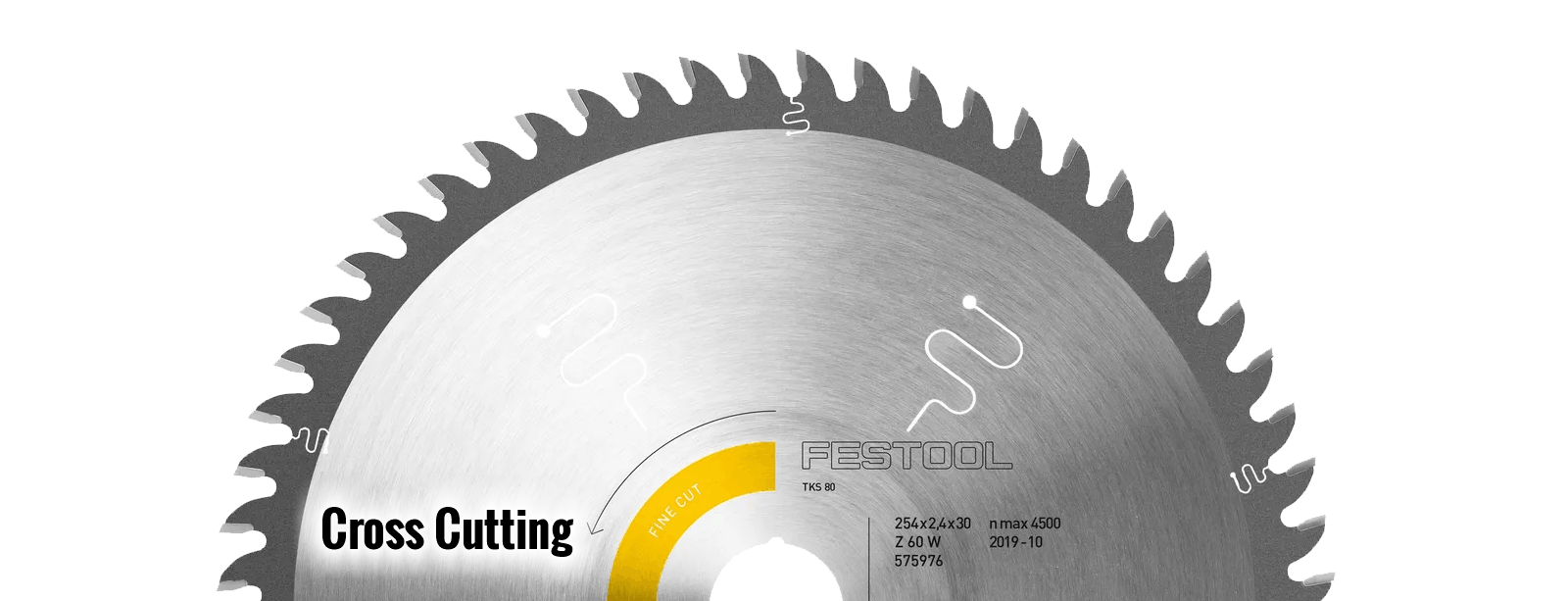
Cross-cutting means cutting across the wood grain. Rather than clearing long fibres in the direction of the grain, the teeth must sever those fibres cleanly. Fine-cut blades therefore tend to have more, smaller teeth and a geometry that slices the surface before removing the waste.
Use a fine-cut blade for visible cross-cuts, mitres, veneered boards, plywood, coated panels and joinery where reducing breakout matters. Remember that more teeth do not automatically guarantee a better result: blade quality, sharpness, machine alignment, material support and feed rate are equally important.
Laminate and HPL blades: specialist teeth for abrasive surfaces
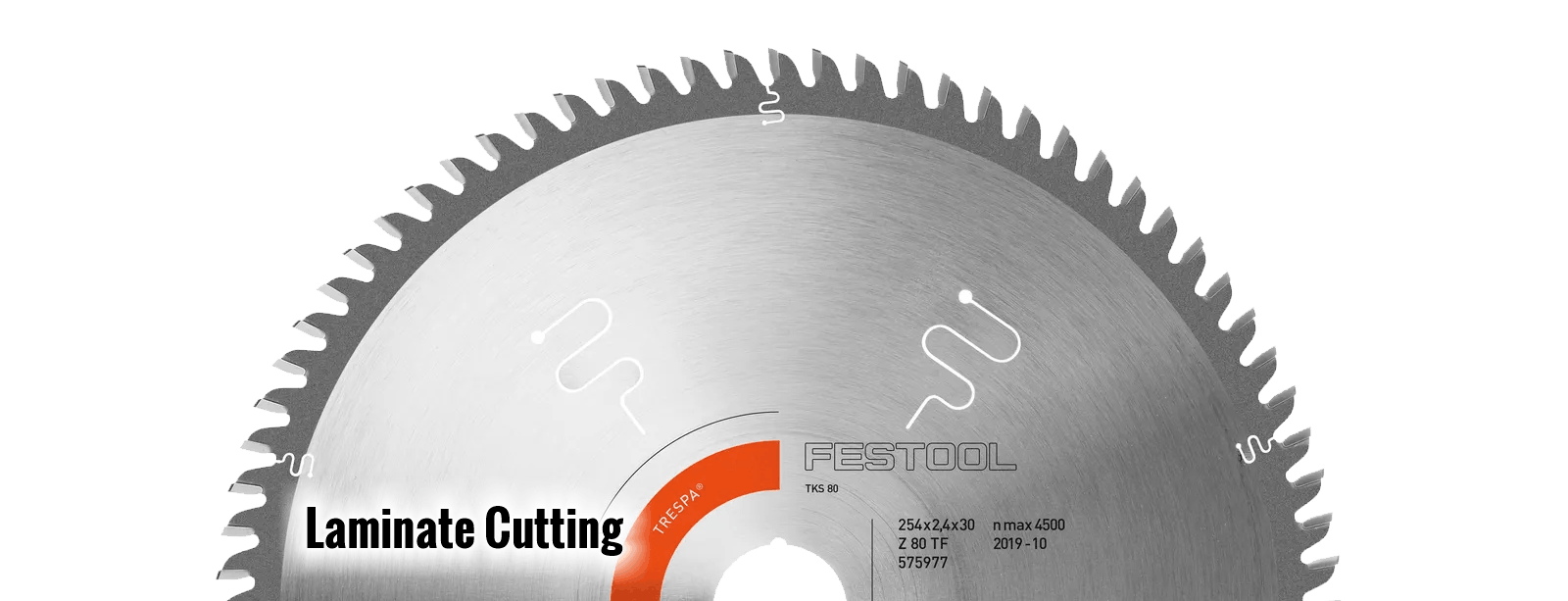
Melamine-faced board, high-pressure laminate and other hard coatings can chip easily and can wear unsuitable teeth quickly. A dedicated laminate/HPL blade commonly uses a high tooth count and a durable trapezoidal/flat or manufacturer-specific tooth pattern that divides the cutting work between alternating teeth.
The specialist blade is only one part of a clean result. Support the panel fully, use a zero-clearance insert or splinter guard where the saw permits it, and make sure the blade is clean, sharp and correctly aligned.
Aluminium and plastics blades: controlled cutting in demanding materials
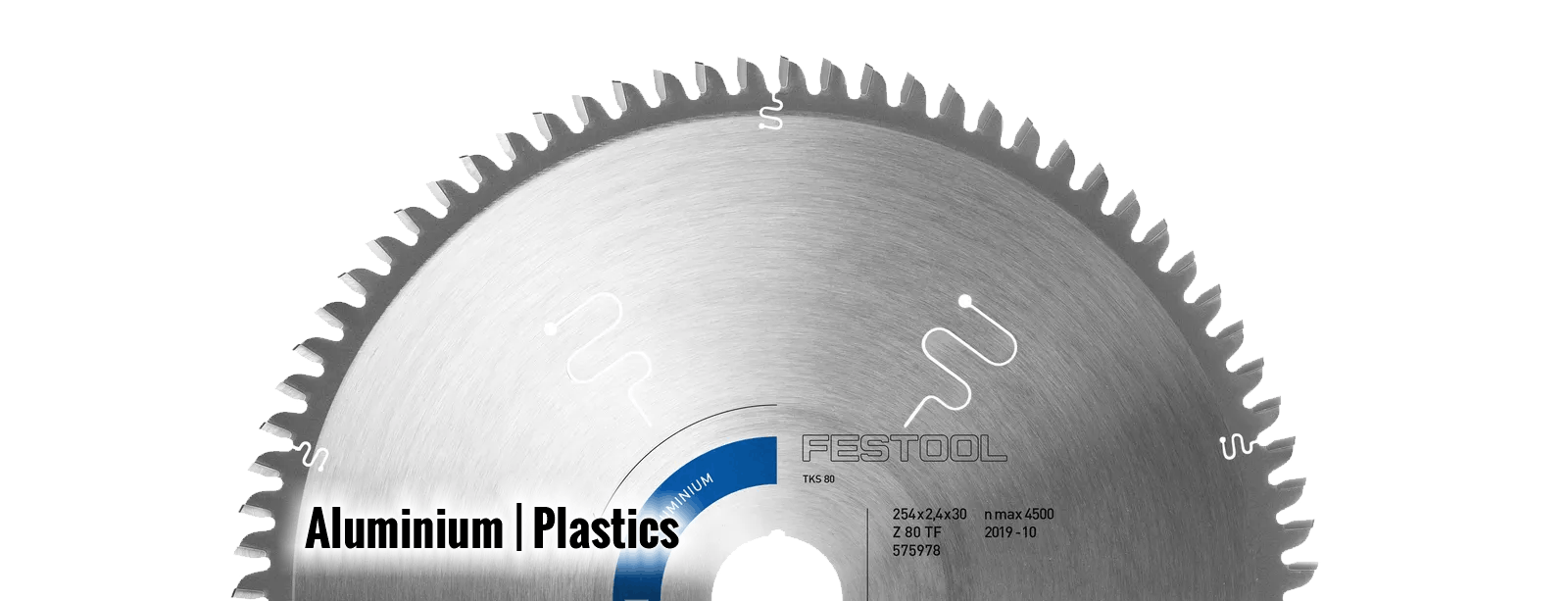
Aluminium profiles, hard plastics and fibre-reinforced plastics require a blade designed to cut them. These blades typically use fine, robust carbide teeth and a controlled tooth geometry to reduce grabbing and protect the cutting edge.
Do not assume that an ordinary fine-tooth wood blade is suitable. Confirm that both the blade and the saw are approved for the exact material. Secure the workpiece using the method specified by the saw manufacturer, control offcuts and follow all guidance concerning lubrication, speed and profile support.
Steel-cutting blades: only for an approved machine and application
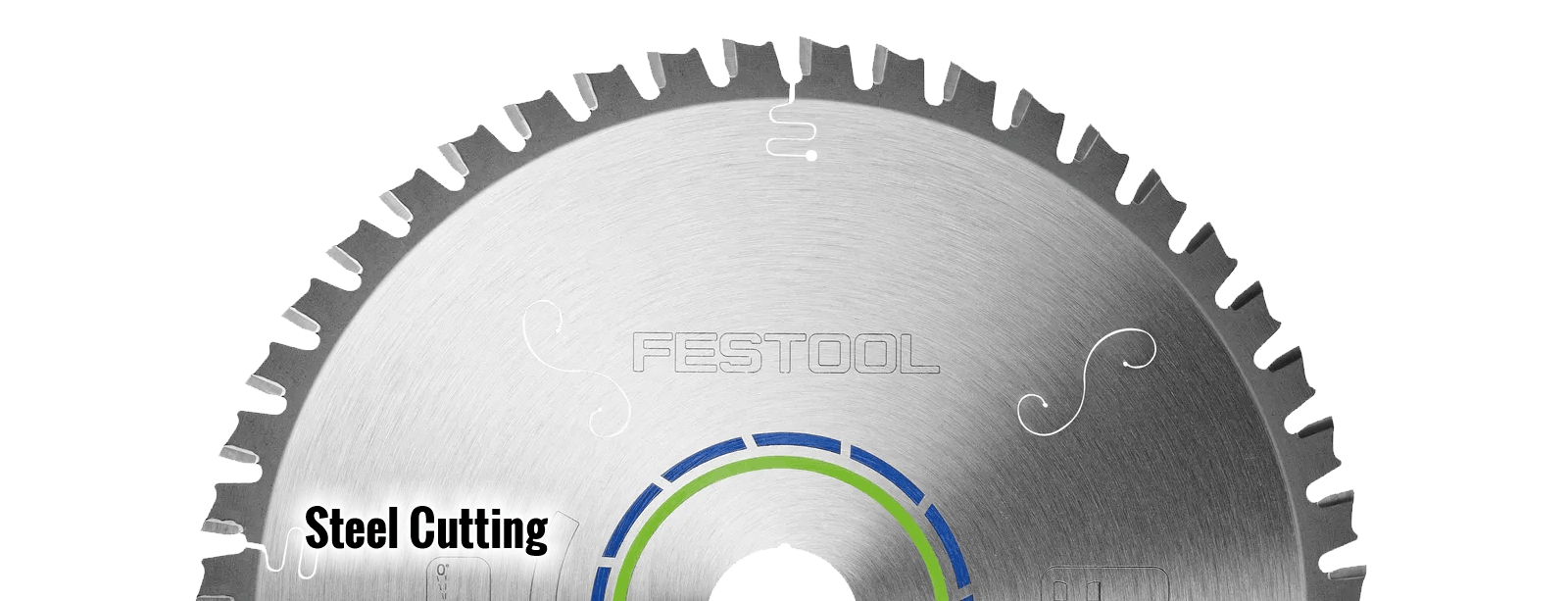
Steel is not simply another material for a general-purpose circular saw blade. Use a dedicated steel-cutting, carbide-tipped or cermet-tipped blade on a machine approved for that cutting system. Check whether the blade is intended for thin sheet, tube, profiles or thicker sections; one steel blade is not automatically suitable for every grade and wall thickness.
Never substitute a toothed steel blade for an abrasive cutting disc, or vice versa, unless the machine manufacturer explicitly approves that accessory and application.
Construction timber and hidden fasteners
A normal wood blade should not be expected to survive contact with nails, screws, masonry or cement residue. If reclaimed or construction timber may contain embedded fasteners, inspect it carefully and choose a blade specifically rated for nail-embedded wood or demolition work. “Carbide tipped” alone does not mean that a blade can safely cut nails.
3. Understand tooth count — but keep it in context
The familiar rule is useful: fewer teeth generally cut faster and more coarsely, while more teeth generally cut more slowly and leave a finer edge. It is a starting point, not the whole answer.
- Low tooth count: larger bites, more space for chip removal and efficient ripping.
- Medium tooth count: a versatile balance for mixed ripping and cross-cutting.
- High tooth count: smaller bites and a cleaner finish in cross-cuts, panels and suitable non-ferrous materials.
Tooth count must be considered relative to blade diameter. A 24-tooth 160 mm blade and a 24-tooth 315 mm blade do not have the same tooth spacing or intended behaviour. Compare complete blade specifications and application labels, not the tooth number in isolation.
A very fine blade can cut slowly, create extra heat and struggle to clear chips during a deep rip cut. For that job, a sharp low-tooth-count rip blade may produce a more controlled cut with less strain on the saw.
4. Learn the main tooth geometries

| Tooth geometry | How it works | Typical strengths |
|---|---|---|
| FTG Flat Top Grind |
Square-topped teeth cut like small chisels and clear material efficiently. | Fast ripping in solid wood and durable cutting where a very fine surface is not the priority. |
| ATB Alternate Top Bevel |
Teeth bevel alternately left and right, slicing wood fibres at the edges of the cut. | General wood cutting, cross-cuts, plywood and clean edges. |
| ATBR Combination |
Groups of bevelled teeth are combined with a flat raker tooth and a larger gullet. | A balance between ripping and cross-cutting on a table saw. |
| TCG Triple Chip Grind |
A chamfered tooth removes the centre of the cut before a flat tooth cleans the corners. | Laminate, hard plastics, solid-surface material and non-ferrous metals when specified by the manufacturer. |
Manufacturers may use their own tooth codes, modified geometries or combinations. Festool markings such as W, PW, TF and WZ/FA, for example, should be read together with the blade’s named application. When in doubt, the material list and compatible saw models are more useful than trying to interpret one letter in isolation.
5. Hook angle changes how aggressively the blade cuts
The hook or rake angle describes the direction in which the tooth face leans relative to the centre of the blade.
- Positive hook angle: the tooth leans into the cut and feeds more aggressively. This is common on blades designed for efficient ripping and handheld circular saw work.
- Low, zero or negative hook angle: the tooth enters the material more gently and resists self-feeding. This is commonly preferred for controlled cross-cutting on mitre and radial-arm saws, and for certain non-ferrous materials.
Do not choose a blade for a mitre saw simply because its diameter and bore match. A blade intended for a table saw may have a hook angle that is too aggressive for the mitre saw’s cutting action. Use a blade expressly approved for your saw type.
6. Choose differently for each type of saw
Handheld circular saw
A handheld saw benefits from a blade that feeds freely and matches the available power. A lower tooth count suits fast site ripping, while a medium or fine blade is better for visible cross-cuts and sheet goods. A clean finish also depends on supporting the work correctly and knowing which face of the material is most likely to show breakout with your saw’s direction of cut.
Plunge saw and guide rail
Plunge saws are often used for accurate panel work. Match the blade to the material and make sure its kerf remains compatible with the guide rail’s splinter guard and the saw’s riving system, where fitted. A universal blade is useful for general cutting, while a fine-cut or laminate blade is the better choice for finish-critical panels.
Table saw
A universal or combination blade handles much everyday work. Add a dedicated rip blade if you regularly process solid timber, and a fine-cut or laminate blade for cabinetry and coated boards. Check the riving-knife relationship carefully whenever changing to a thinner-kerf blade.
Mitre saw
Mitre saws primarily make cross-cuts, mitres and bevels. A higher tooth count and a controlled hook angle usually provide the cleanest, least aggressive cut. For aluminium profiles or plastics, use a dedicated blade approved for both the material and the mitre saw.
Cordless saw
A purpose-designed thin-kerf blade removes less material and can reduce cutting effort, helping a cordless saw make more efficient use of its battery. Do not sacrifice compatibility: the diameter, bore, plate thickness, kerf and speed rating must still suit the machine.
7. What blade features are worth noticing?
Carbide-tipped teeth
Tungsten carbide-tipped, often shortened to TCT, teeth stay sharp much longer than simple steel teeth in suitable applications. The quality, size and grade of the carbide still matter, and even a premium carbide blade eventually needs cleaning, sharpening or replacement.
Expansion and vibration-control slots
Slots in the blade plate can help control expansion caused by heat, vibration and noise. Their shape varies by manufacturer. They are engineered features, not damage; however, cracks that extend from a slot or appear elsewhere in the plate are a reason to stop using the blade immediately.
Blade coating
Some blades use low-friction or protective coatings to reduce resin build-up, corrosion and heat. A coating can support performance, but it cannot compensate for the wrong tooth geometry, a blunt edge or poor saw alignment.
Laser-cut plate and tensioning
A well-made, properly tensioned plate runs true at speed and helps the teeth track accurately. This is one reason two blades with the same diameter and tooth count can produce very different results.
8. Diagnose the cut before blaming the saw
| Symptom | Possible blade-related cause | What to check |
|---|---|---|
| Burn marks in wood | Blunt or resin-coated teeth; too many teeth for a deep rip; feed rate too slow | Clean and inspect the blade, then check blade-to-fence alignment and use the correct rip blade |
| Heavy splintering or tear-out | Too few teeth, wrong geometry, blunt teeth or unsupported fibres | Try a sharp fine-cut blade and improve workpiece support or the zero-clearance system |
| Chipping on melamine or laminate | General wood blade used on an abrasive, brittle coating | Use a dedicated laminate/HPL blade and verify the saw setup |
| Saw labours or battery drains quickly | Blunt blade, incorrect blade type, packed gullets or excessive kerf | Fit a sharp application-specific blade; consider an approved thin-kerf blade for cordless work |
| Cut wanders or feels rough | Damaged teeth, warped plate, loose fit at the bore or unsuitable feed pressure | Stop immediately and inspect the blade, arbor, flanges and machine alignment |
| Excessive vibration or unusual noise | Loose blade, contamination between the flanges, damage or an incompatible accessory | Switch off, isolate the saw and inspect it before further use |
A premium blade cannot correct a misaligned fence, damaged arbor, loose bearing, poor workpiece support or incorrect technique. If a known-good blade still produces poor cuts, check the machine according to its manual or have it inspected by a qualified service technician.
9. Look after the blade you buy
- Keep it clean: resin and adhesive build-up increase friction and make a sharp blade behave like a blunt one. Use a cleaner approved for saw blades and follow its directions.
- Inspect before use: look for missing, chipped or cracked teeth, plate cracks, distortion and bore damage.
- Store blades separately: use the original packaging, a blade case or a wall rack that prevents carbide teeth from knocking into one another.
- Sharpen professionally: a good carbide-tipped blade can often be resharpened. Use a service that can restore the original tooth geometry and blade balance.
- Do not force a dull blade: extra feed pressure increases heat, reduces control and places unnecessary load on the saw.
10. Essential safety checks
- Disconnect the power or remove the battery before touching, fitting or cleaning a blade.
- Use the blade guard, riving knife, push sticks, clamps and other safety equipment required for the saw and the cut.
- Wear suitable eye, hearing and respiratory protection, and use dust extraction where appropriate.
- Make sure the blade is fitted in the correct direction and tightened using the method and tools specified by the saw manufacturer.
- Check that the blade is rated for the saw’s RPM and approved for the material.
- Support long or wide workpieces so they cannot twist, drop or close onto the blade.
- Never use a cracked, warped or damaged blade, and never attempt to repair one.
- Allow the blade to reach full speed before starting the cut, and wait for it to stop completely before moving offcuts or setting the saw down.
Your saw-blade shopping checklist
Take these details with you when shopping online or asking for advice:
- Saw make and exact model: compatibility is easier to confirm from the model number.
- Saw type: table, mitre, plunge, handheld circular or approved metal-cutting saw.
- Blade diameter: for example, 160 mm, 216 mm or 254 mm.
- Bore size: for example, 20 mm or 30 mm.
- Permitted kerf and blade-body thickness: especially important with a riving knife.
- Maximum RPM requirement: taken from the saw and blade ratings.
- Material: solid wood, plywood, MDF, melamine, HPL, aluminium, plastic or steel.
- Cut direction: ripping, cross-cutting, mitres or mixed work.
- Priority: fastest cut, cleanest edge, longest life or an all-round balance.
- Hidden hazards: confirm whether construction timber may contain nails or other fasteners.
First match the blade to the saw. Then match it to the material. Finally choose the tooth count and geometry that give you the balance of speed and finish your project needs.
Frequently asked questions
Can I use one circular saw blade for everything?
A good universal wood blade can cover a large portion of everyday woodworking, but it is not a safe substitute for blades designed for laminate, aluminium, plastics or steel. Specialist materials require a specialist blade and a compatible saw.
Does a higher tooth count always give a cleaner cut?
Not always. Higher tooth counts generally favour fine cross-cuts, while lower tooth counts clear chips more effectively during ripping. Blade quality, tooth geometry, diameter, sharpness, feed rate and machine setup all influence the finish.
What is the difference between a rip blade and a crosscut blade?
A rip blade is designed to cut efficiently along the wood grain and usually has fewer teeth with larger gullets. A crosscut or fine-cut blade severs fibres across the grain and usually has more teeth for a smoother edge.
Can I cut aluminium with a wood blade?
Do not assume that you can. Use a blade specifically marked for aluminium or non-ferrous metal, and only on a saw approved for that application. Follow the blade and saw manufacturer’s instructions for clamping, support, speed and lubrication.
Why does my saw burn the wood?
Common causes include a blunt or dirty blade, using a high-tooth-count blade for a deep rip, feeding too slowly, binding caused by poor alignment or internal stress in the timber. Stop and correct the cause rather than forcing the cut.
When should a saw blade be sharpened or replaced?
Have the blade assessed when a previously good setup starts cutting slowly, burning material, producing rough edges or requiring extra feed pressure. Replace it immediately if the plate is cracked or distorted, the bore is damaged, or teeth are missing or severely damaged. A sound, quality carbide blade can often be professionally cleaned and resharpened.
Ready to find the right blade?
Happy Toolbox stocks circular saw blades for everyday woodworking, precision cutting and specialist materials. Use the checklist above, compare the complete specifications and contact us if you would like help matching a blade to your saw and project.